AI is now reaching the physical half of the economy. The next frontier is the process industry: the power, chemical, metal, and cement plants that produce the energy and materials our economy depends on. The routine inspection and maintenance that keeps those plants running is still done by hand, in their most dangerous corners, and it is where most unplanned downtime begins.
ANYbotics builds the autonomous workforce for that world, and today our robots run hundreds of thousands of autonomous inspections a month for industrial customers. It works because we own the whole stack: Physical AI, Industrial AI, and Workflow Integration. That took a decade to build. This is how we scale it.
Sixteen Years in Robotics
When we founded ANYbotics in 2016, legged robotics was still a small field. Robots were programmed line by line. Demonstrations took days to set up. The world treated these machines as a curiosity, while industrial robots stayed locked inside safety cages on the factory floor. We started the company because we believed robots could do far more, and that the way to prove it was to step out of the lab and build something useful in the real world.
The work began in 2010, when my co-founders at ETH Zurich built one of the first electrically driven legged robots in the world. Six generations followed, with 27,000+ academic citations across the research foundation behind ANYmal and deliveries to 25 universities and research institutions worldwide. In 2017, the ETH Zurich team reached the finals of TotalEnergies’ robotics challenge, the first serious test of an autonomous robot for hazardous oil and gas environments. A year later we shipped our first robot for offshore deployment.
“We have been building toward Physical AI for over a decade.”
In 2018, ETH Zurich published the world’s first application of Physical AI to a legged robot, a deep reinforcement learning controller for locomotion. From 2021 onward, every ANYmal we ship has run this approach at its core, because only it delivers the performance and reliability the industry needs. That same year, the ETH Zurich-led team won first place at the DARPA Subterranean Challenge using the ANYmal platform, setting a public benchmark for industrial-grade autonomy in unstructured environments.
The Physical Half of the Economy
The global economy is worth about $126 trillion, and roughly half of the workers who power it earn their living through physical work. AI has transformed the digital world. It writes our code, generates our images, and reasons in our language. Reaching the physical half will require a physical embodiment of that intelligence. Industrial robots and AMRs have taken on discrete manufacturing and warehousing. The next large frontier is the process industry, and it is enormous: the plants that generate our power and refine our fuels, that produce the metals, cement, and chemicals the world is built from, and that turn raw inputs into the paper, packaging, food, and beverages we use every day.
“If the process industry stops, everything stops.”
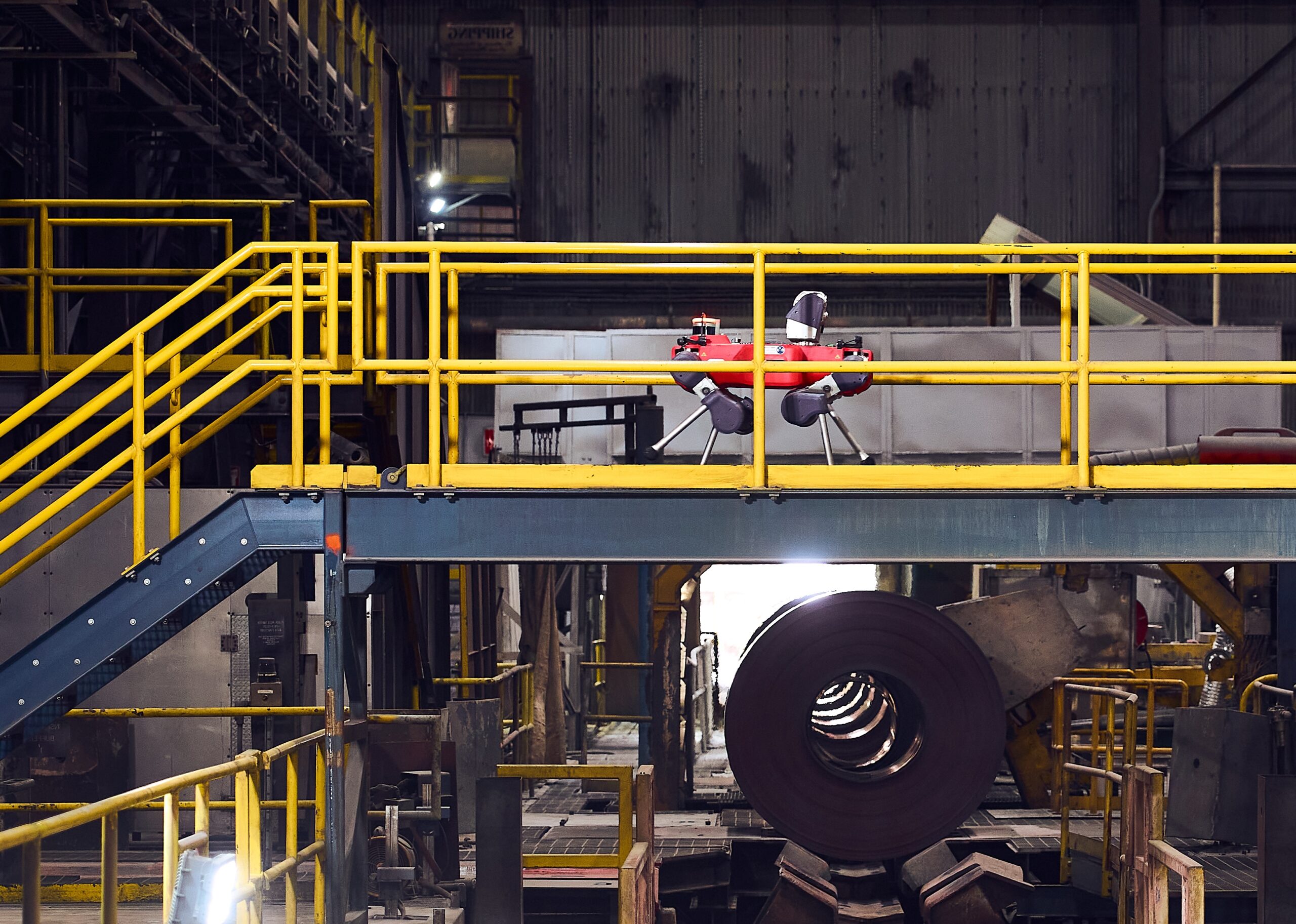
These plants are heavily automated where the process flow itself is concerned. Pumps, valves, and pipes move fluids, conveyor belts move solids, and continuous control systems have been refined for decades. What has stayed manual is the inspection and maintenance of those flows. Fixed sensors help, but they only watch the places you already worry about. Undetected failures cost the world’s 500 largest companies an estimated $1.4 trillion a year in preventable downtime. On average, a single hour of downtime costs a company $250,000. And the people who keep these plants running carry the risk: a worker on the plant floor is roughly ten times more likely to be injured than one working in an office.
What is new is the readiness to solve it. Five years ago, a robot in the plant was an experiment run by a curious site manager. Today it is a C-level mandate at most of the industrial companies we talk to, because the maintenance workforce is retiring faster than it can be replaced, critical infrastructure has become a board-level resilience priority, and the technology has finally matured enough to be trusted with the work. Every customer we speak to now understands the need. What they are still working out is how to succeed in the adoption.
The Only Way to Deliver AI into the Physical World
A capable robot is hard to build. So is the AI that makes sense of what it sees. But neither, on its own, is enough. The test is getting them into a live plant that cannot stop, performing safely, day after day. That takes three things, built together.
“Our belief is Physical AI × Industrial AI × Workflow Integration.”
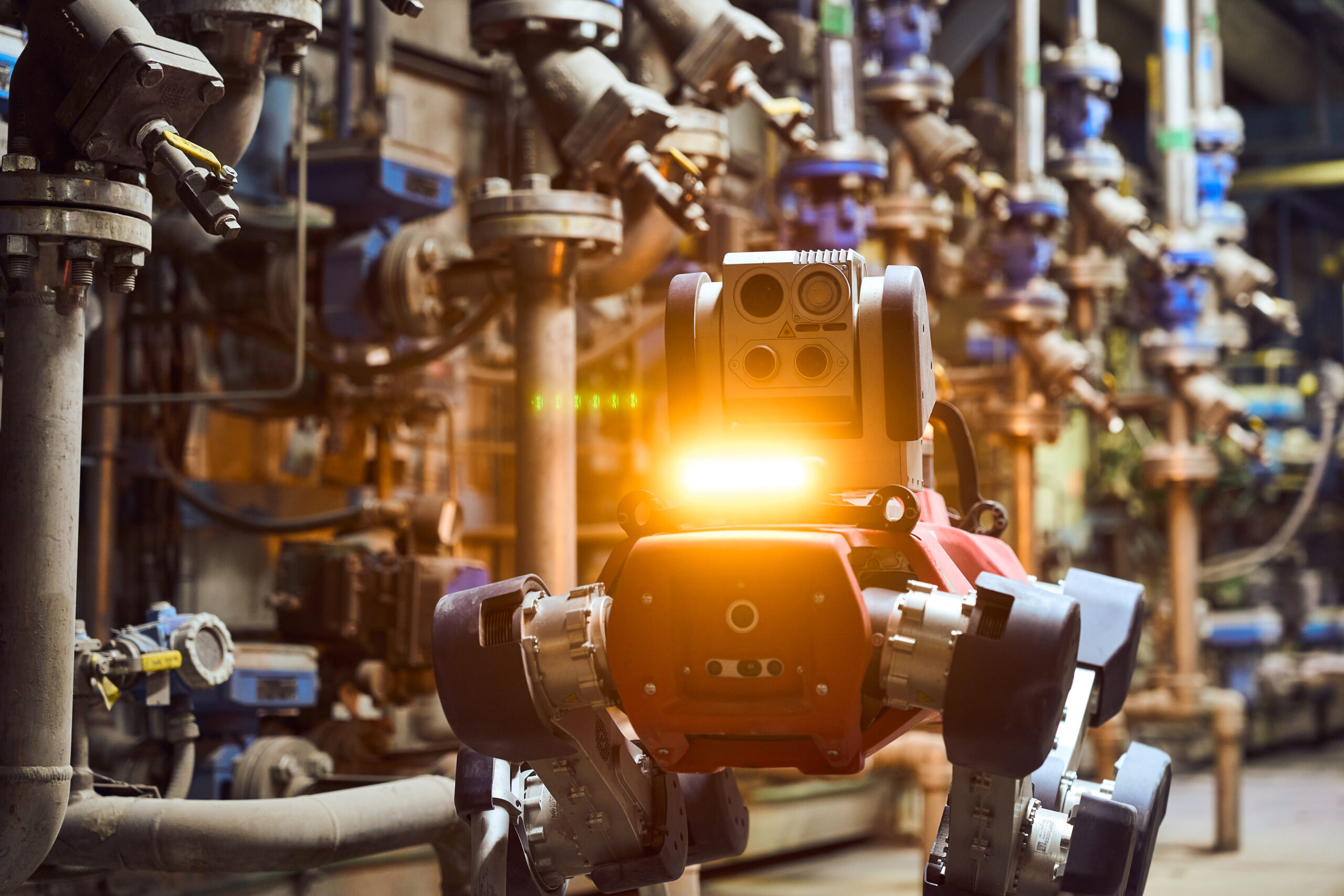
Physical AI is the robot and the autonomy that drives it. We build the full stack, hardware and software, because the reliability a refinery demands cannot be bolted onto a generic platform. It is what lets ANYmal walk a live plant on its own, anywhere a person can go, across stairs, gratings, and hazardous terrain, with 99% stable missions and 95% autonomous operation. It carries thermal, acoustic, ultrasonic, and gas sensing, capabilities no human inspector has.
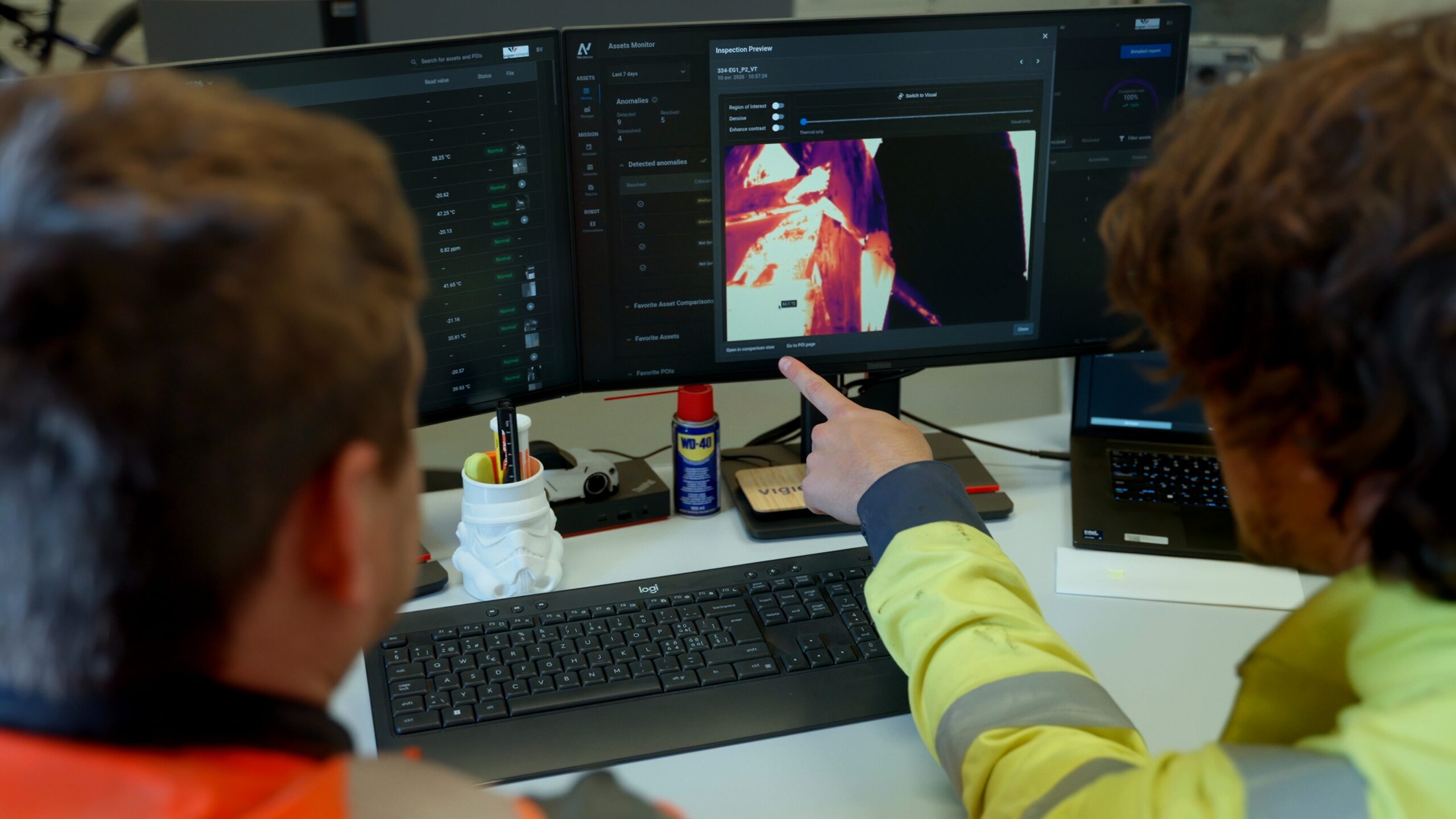
Industrial AI is the engine that reads what the robot sees: a hot spot on a motor housing, a leak developing at a flange, a vibration signature drifting out of range across six weeks. Models are specialized by equipment family, pumps, compressors, heat exchangers, transformers, and those assets are the same across industries. A pump in a cement plant fails on the same principles as a pump in a refinery, and shows the same signs before it does. The robot gathers the observation. This layer turns it into a finding.
“This data isn’t on the internet. It has to be walked.”
The rich, outside-the-machine signals that train it, hot spots, air leaks, corroded valves caught before they fail, have never been gathered at scale, and they are impossible to simulate. The only way to build this asset is to put real robots into real plants and earn it, which also takes the trust customers place in us to handle the most sensitive data they own. Our deployed robots are connected and continuously feeding the engine, and every additional month the fleet runs in production deepens a dataset that exists nowhere else.
Workflow Integration is the part that gets too little attention, and it is where pilots usually die. A finding has to arrive inside the systems a plant already runs, as a work order with a priority and a date, in front of the person whose job it is to act. That means DCS, historian, CMMS, and ERP integration, and building inside the ecosystems our customers have standardized on, which is why we closely partner with Siemens Energy, GE Vernova, Yokogawa, SLB, and Kanadevia Inova. It also means getting a maintenance team that has done its job the same way for thirty years to trust a new way of working.
A robot without Industrial AI is a data collector. AI without the robot has no access to the plant. Either of them without Workflow Integration doesn’t pass the pilot stage. The value appears only when all three run as one system, and end-to-end vertical integration is the only posture we have seen survive inside a working plant over the long term.
The Hard Lesson: How Customers Actually Adopt Physical AI
Plant managers know their pain in detail. Most can tell you within five minutes which inspection rounds carry the most risk, the ones where a problem that slips through becomes the most expensive to fix. And they feel the clock. The inspectors who hold thirty years of equipment-specific judgment are retiring, and that knowledge leaves with them. What they do not know is how to deploy a robotic solution into their operations, and making it succeed is shared work between vendor and customer.
“We don’t sell robots. We sell the failure that never happens.”
For a long time, we treated the robot itself as the primary deliverable, and some of those first fleets never scaled past their initial deployment. We had been selling the machine and counting the hours it freed up. The true ROI is asset integrity and asset performance: equipment that keeps running, and shutdowns that never start. So we spent years on customer sites, walking plants with operators, mapping assets, watching shifts, and studying decades of downtime data. After hundreds of industrial deployments, we turned what we learned into the ANYbotics Adoption Accelerator, which all of our customers now go through. It takes them from business value assessment through onboarding and value realization to enterprise scaling, with measurable KPIs at every step, and it supports the customer through the work on their side: ERP integration, work order automation, safety procedure updates, and getting the IT, OT, maintenance, and safety teams to act together.
“Certification is not a feature. It is the ticket through the gate.”
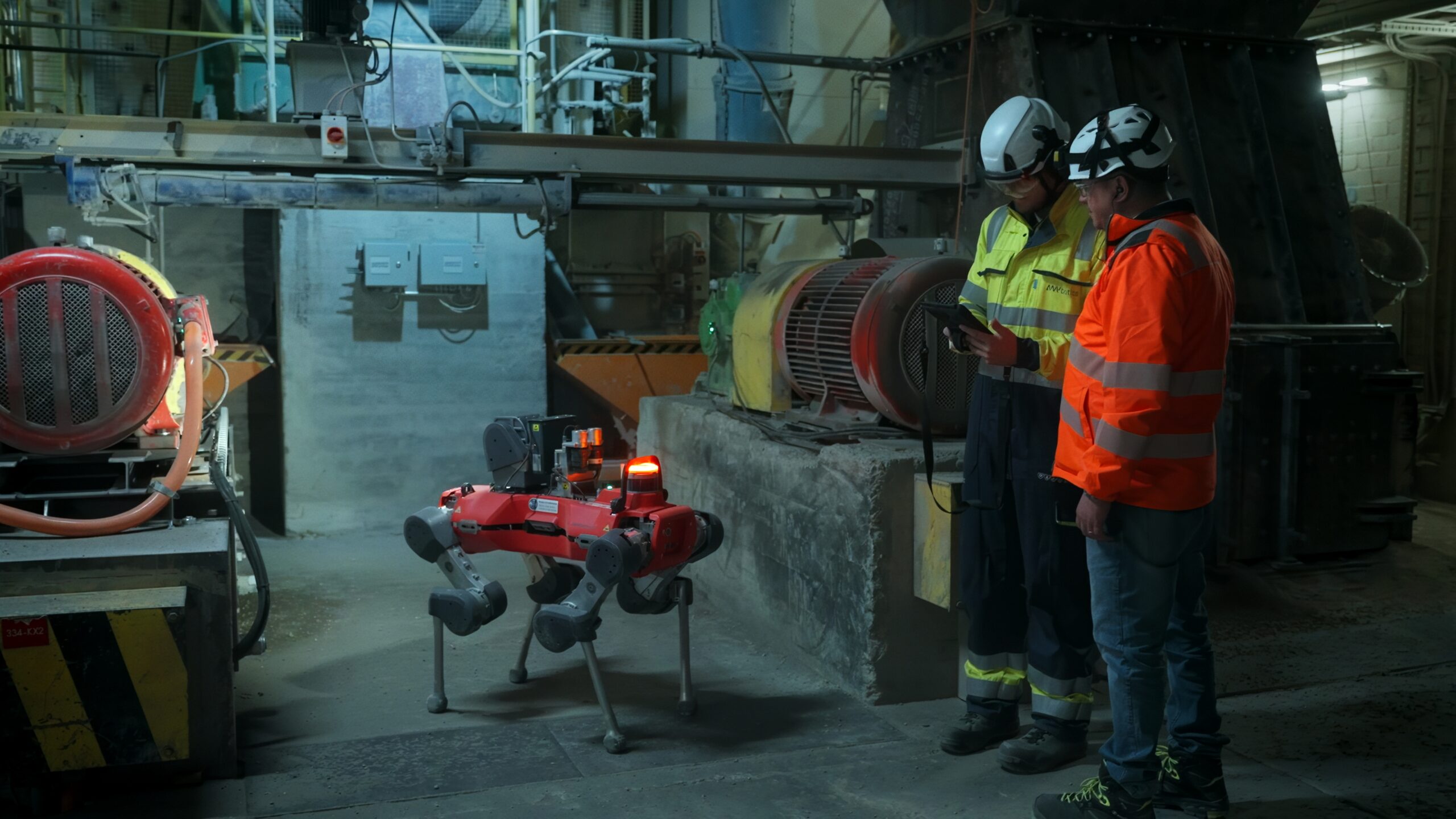
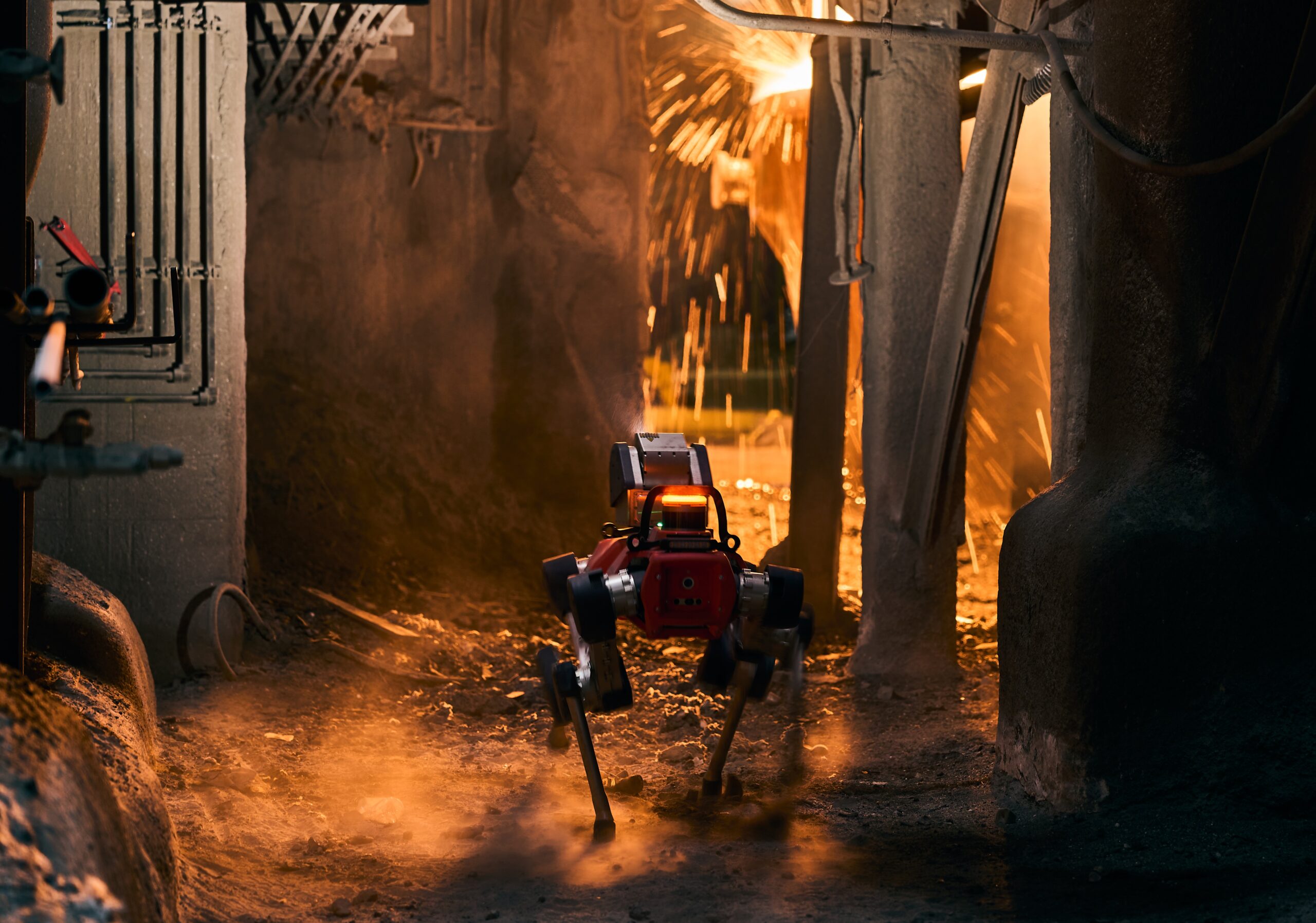
The second lesson was about access. The plants where the stakes are highest, in oil and gas and chemicals, are also the hardest to enter. Going from a working prototype to a certified product that survives 24/7 operation in a refinery is a multi-year, multi-discipline grind. It has to be built into the architecture, the design, and the engineering culture from day one. Retrofitting it onto a generic platform does not work. Entering some of those hazardous zones requires ATEX/IECEx Zone 1 certification, a machine guaranteed never to create a spark. Industry experts called an Ex-certified legged robot impossible. It took us four years to prove them wrong.
What the Vertical Approach Delivers
The proof is in production. ANYbotics’ autonomous systems serve 50 industrial customers globally and log thousands of autonomous operating hours every month. In plant after plant the same shift happens, from reactive to proactive. Problems get caught while they are still small, and decisions start running on data. Our customers are starting to expand their fleets to repeat the result across their plants.
A utility in California put a fleet of ANYmal robots to work across its substations, catching overheating conductors, partial discharge, and gas leaks before they could bring the grid down, and avoided more than $3.5 million in downtime cost. A steel mill in the US Midwest avoided $3.9 million in furnace breakdown costs. A paper and packaging plant has unlocked $400,000 in annual energy savings. At a 150-year-old cement plant in Switzerland, ANYmal has avoided $660,000 in shutdown costs and 127 hours of downtime, and regularly raises ammonia and carbon monoxide alerts. And at a stainless steel plant in the Nordics, human exposure to hazardous areas is down 70%.
The people who run these plants bring judgment, creativity, and an understanding of context that no machine has. A machine never grows used to a smell, never decides the reading looked fine last week, and measures the same point on the same pipe to the millimeter, every week, for years. For the people in these plants, the robot becomes a co-worker, part of a complementary workforce that takes the routine rounds and the hazardous ones so they can spend their time on the work humans are best at.
The Masterplan: From Inspection to the Generalized Industrial Workforce
Inspection is our wedge. It pays for itself within months and earns us the right to come back. What sits beyond it is much larger, and the way to read the next decade is through the same three layers, with every stage advancing all of them together.
“Robots earn the data, data earns the intelligence, intelligence earns the agency, and agency earns the workforce.”
The first two stages are behind us. From 2021 to 2023 we built Automated Rounds, locomotion reliable enough to replicate the human walkdown at a frequency and consistency people cannot match. In 2024 and 2025 we built the full Inspection Solution: cloud platform, fleet management, large-scale autonomy in live plants, and the Industrial AI engine now used by every one of our customers.
We are in the third stage now, Industrial Intelligence. The robots navigate on their own, but in human terms they are not yet smart. Today we work with each customer to decide what the robot should watch, based on where downtime has hurt them before, and the robot delivers exactly that: the right readings from the right assets at the right frequency. Each reading is still a snapshot without context. The next step is to give the Industrial AI layer that context, fusing what the robot senses, thermal, acoustic, gas, and visual, with the plant’s own operational and environmental data into one holistic assessment of asset health. That is where the largest untapped value sits. From there come agentic missions, where the customer defines which assets matter and the robot understands the context, plans its own missions, and coordinates the fleet.
The stage after is Proactive Agency. The robot stops waiting to be told what to look at. It walks the facility, continuously scans, draws on having effectively seen thousands of plants in training, and tells the operator where something is changing. It schedules its own rounds and chooses what to check next based on what it saw last time. Imagine unpacking a robot, having a conversation with it, and watching it propose an inspection strategy for your plant. A ChatGPT moment for industrial robotics.
Then we give them hands. Closed-Loop Asset Intelligence is where the robot stops only observing and starts acting on the environment, closing the loop from inspection to prevention. The first tasks are deliberately small: turning a manual valve, opening a cabinet to reset a breaker, taking a sample at a defined point, wiping a sight glass before reading it, greasing a bearing on a scheduled round. Over time the tasks grow toward increasingly complex maintenance and repair work, and the loop closes fully, from observation to action, with people moving from in the loop to on the loop.
“We are building the autonomous workforce for the industrial world.”
Ultimately, we will see a Generalized Industrial Workforce, a fleet of legged, wheeled, aerial, and humanoid robots. Form follows function. Different tasks call for different bodies, and we are agnostic about the shape. What carries across every body is the part that is hard to build and impossible to buy: our Industrial AI engine, much of our Physical AI, the certified access to the plant, the trust to handle a customer’s most sensitive data, and the Workflow Integration depth earned over a decade.
What We Are Building Toward
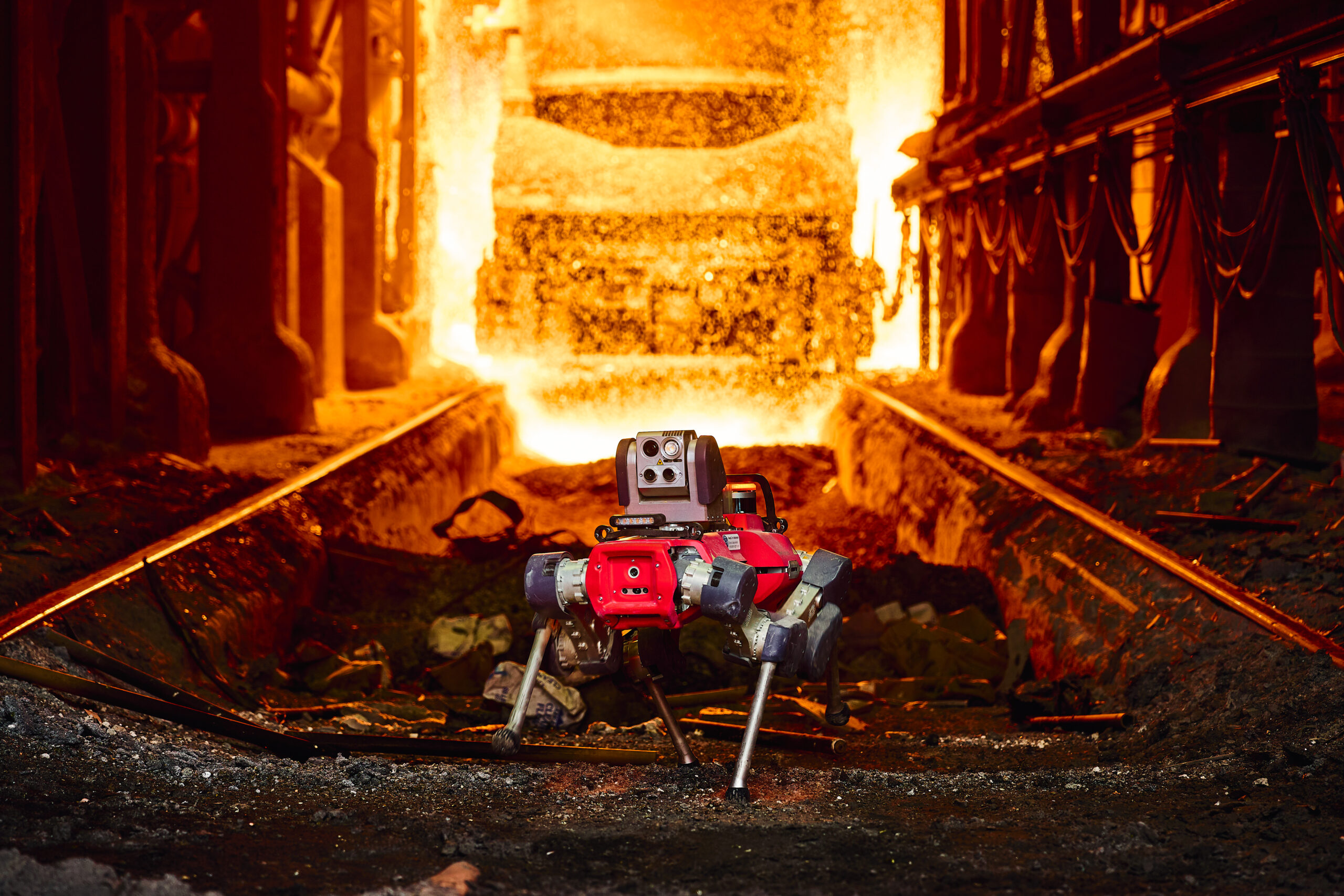
Robots have always felt magical to me. They see what we miss and go where people should not have to. I have spent the last sixteen years in robotics because it is the one technology that finally reaches into the half of the economy software has never been able to touch. This transformation will play out over the next twenty years, and the companies that get there first will shape it.
None of it arrives as a single breakthrough. It arrives the way the last decade did, one plant, one certification, one earned reorder at a time.
We started this company ten years ago today. The first decade went into building the robots, capturing the data, and earning the trust to work in these places at all. The second decade is about scale — and that shift starts now.